Seattle Police Department records office, in Vampire: the Masquerade: Bloodlines 2
They hate sunlight and running water. With a little caution, though, they can survive for centuries. ...Lurking in the shadows. Biding their time.
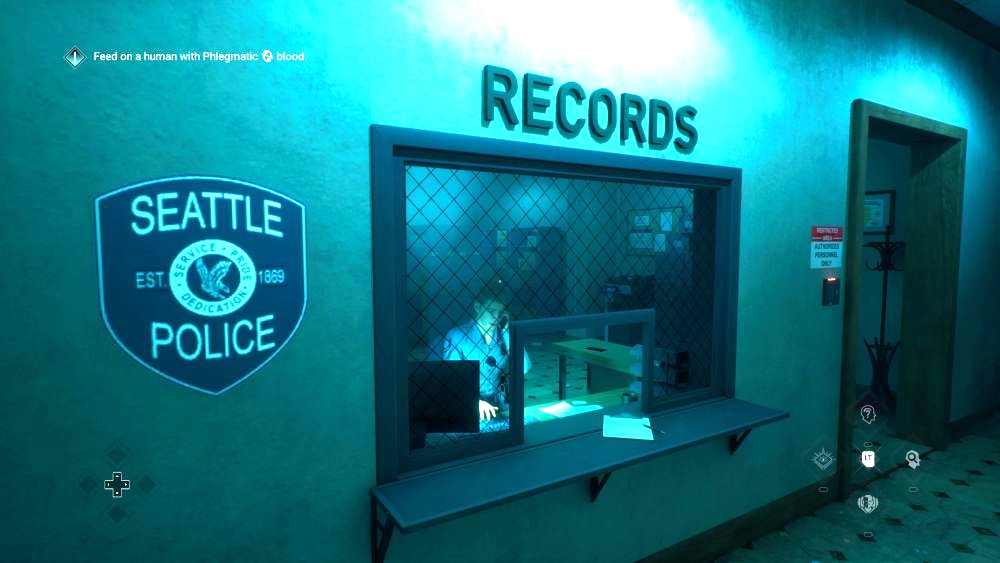
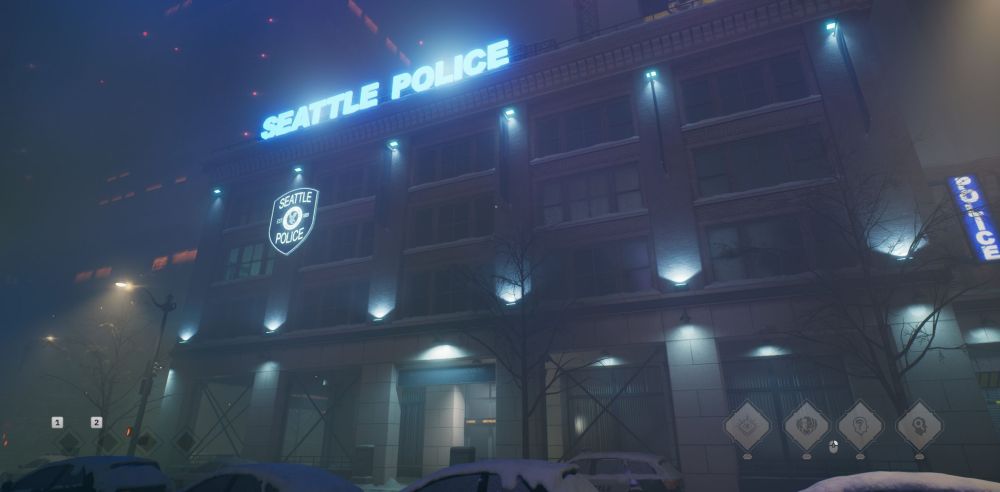
...we're talking about public records. Obviously. The long-awaited sequel to Vampire: The Masquerade: Bloodlines arrived in 2025 with not one, but two point-of-view characters. Fabien, a noir vampire detective, serves up backstory and a comic counterbalance to the central broody antihero. And as a police officer, Fabien even gives us a chance to snoop around a version of the Seattle Police Department's records room. Let's take a look.
Plausible setup! There's a clear, secure point of access, and plenty of space for people to work inside. In the real world, the nice officer at the window would probably rather you ask her for what you need, instead of just walking in and digging through the files. But it's typical for games and movies to ignore that process. I'm more surprised that the person in charge of the file room seems to *also* be a uniformed police officer. Different jobs!
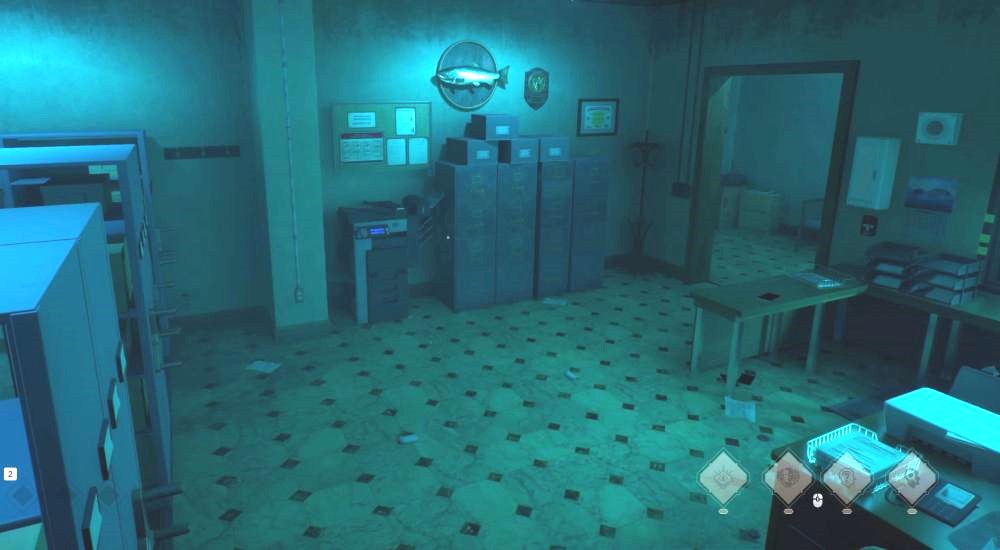
What they're doing here isn't archiving, exactly, but they're still taking care of public records. This is a municipal government agency, and their records exist in an in-between state: most of them aren't suitable for release to the public, but they could be archival anyway. So the records officer has a responsibility to preserve them. Good stewardship of the public domain starts at the source! A few different laws and administrative codes spell out how long these records have to be kept, how they should be protected, what to do with them when they're no longer needed, and, of course, the penalties to the agency if those rules aren't followed.
In the state of Washington, records of historically significant or "notorious" cases are archival, and become the property of the state archives. And of course, no one can say which cases will become famous.
I'd guess the real Seattle Police Department has quite a bit more files on the shelves (which are probably taller.) But I'll still give this a passing grade.
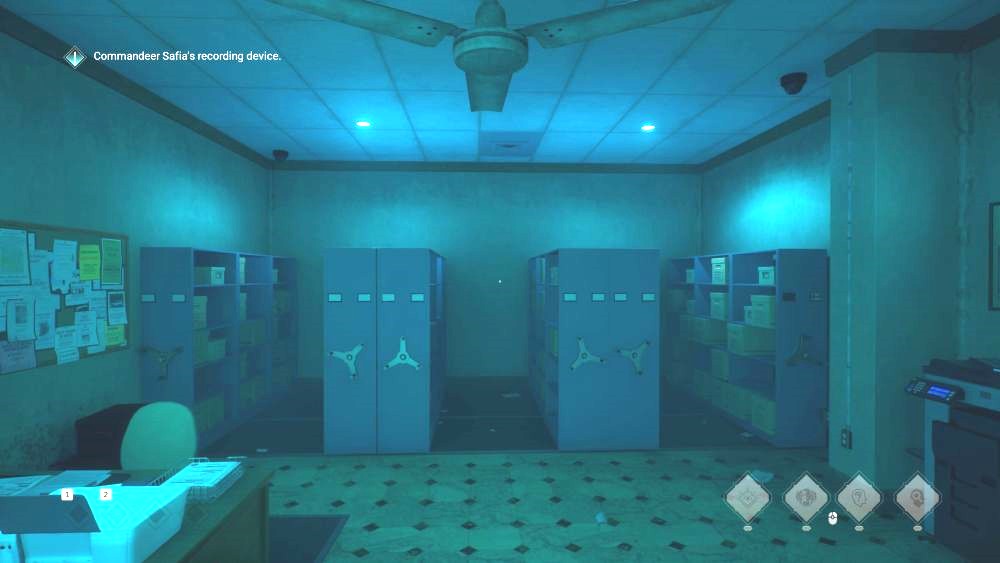
Q: What are these?
A: This is a set of rolling shelves. Those big crank wheels move the individual shelves along a track, so you're not wasting space with aisles no one is using. It's a space-saving innovation, and you'll see these a lot in archives and libraries. The fancier version has electronic push-button controls, which have the smarts to automatically figure out which shelves to move in order to open up the aisle you want. (And hopefully, some kind of sensor so it won't smoosh anyone who happens to be standing in the wrong place.) This layout doesn't make much sense, though, since they could easily fit another unit or two in there; they have rolling shelves, but aren't actually using them to save space.
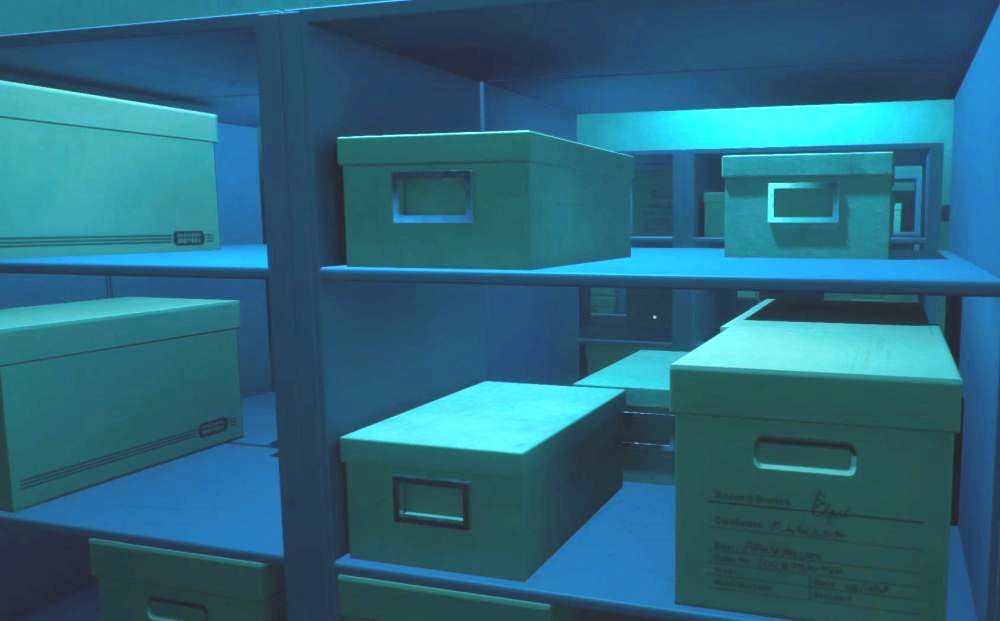
Another gotcha: Using rolling shelves means you'd store records on *both* sides of the shelf, and that doesn't look like it's happening, here. The designers probably just didn't want it to look cluttered. (Wish we had that luxury!)
You'll notice they keep some records in boxes on the rolling shelves, and others in standing file cabinets. That's plausible. Those metal cabinets are convenient for often-used files, but not great for long-term preservation. Files can shake loose or get snagged in the drawer hardware, and it's easy for pests to get inside.
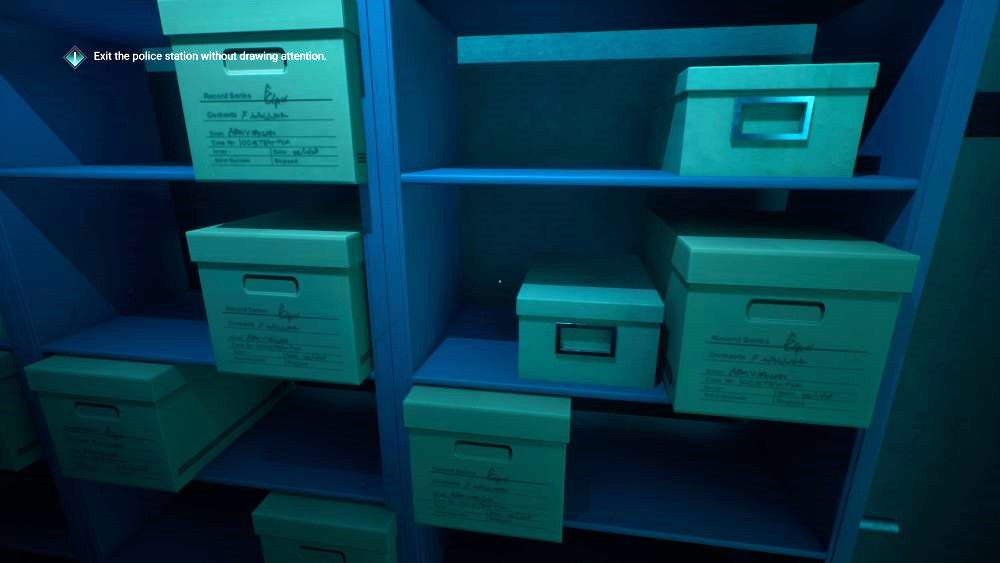
Q: What are these cardboard boxes?
A: Now we're talking. These are file boxes, and they're pretty real to life. Agencies order these by the pallet from archival supply companies, and fill them up with acid-free folders, which help keep the paper files upright and organized. These are larger, heavier boxes than we tend to use for paper in archives (and we don't label them in marker,) but for working files like this, they're a good choice. The labels are all in the same handwriting, too, which tells us the records officer has been here for a while. She probably knows what's in the collection! That's important. I'm guessing today, the arency would also have barcode labels on these boxes.
The smaller boxes would hold photos. It's a little suspicious that they're unlabeled, but those little metal label-holders are a pain to work with. Most of us prefer plan cardboard ends.
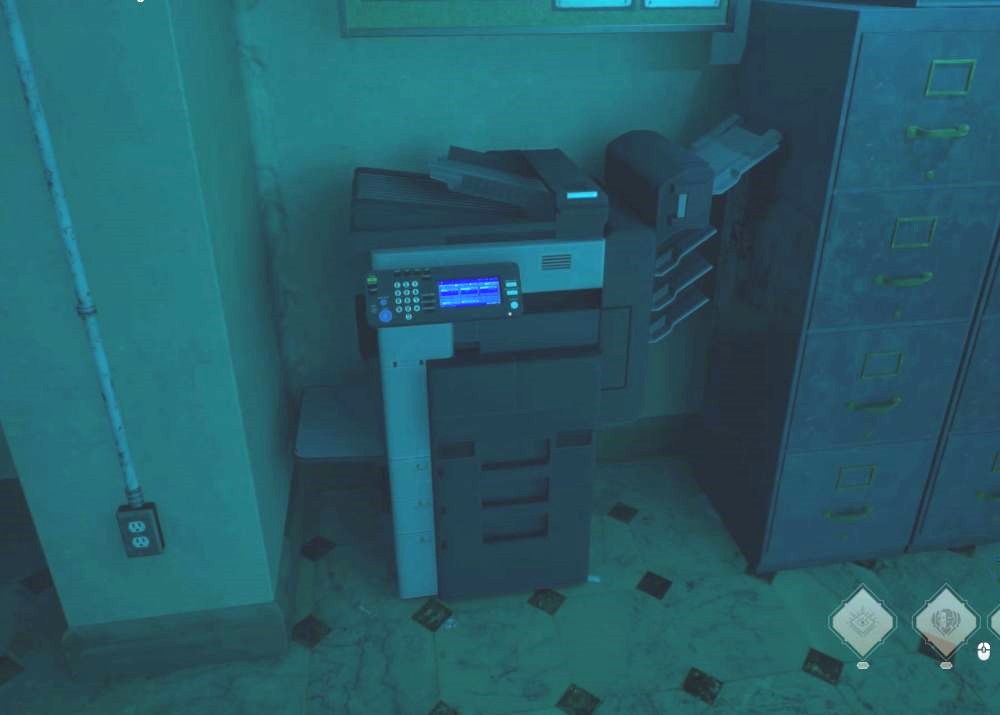
Q: How about the copier?
A: There is a texture bug where the copier's control panel is backwards, but the machine is just about right, otherwise. Agencies usually lease these machines from vendors. If they're smart, they'll have policies to delete data from the copier's memory, since that can store confidential info that shouldn't go back to the vendor when the lease is up. Need to copy a large document, like a big, heavy book spread? The "lid" part probably comes off, to make more room. Never say records management isn't a physical job!
Q: Is that really how file cabinets talk?
A: Yes.